Signed, Attributed, "School of": How to Read a Painting's Label
Beneath a painting, a few words: a name, a date, "oil on canvas," sometimes "attributed to" or "school of." These phrases are not decorative: in France, a 1981 decree fixes their meaning.
28 October 2026
A Decree to Name Things Clearly
Décret n° 81-255 of 3 March 1981 on the suppression of fraud in transactions involving works of art and collectors' items, often called the décret Marcus, governs the words used by those who sell works of art. [Translator's note: this is a French decree; it governs sales conducted under French law and does not regulate art sales made outside France.] Its first article provides that the seller, whether regular or occasional, must, if the buyer asks, provide them with an invoice, a receipt or a statement setting out what he has claimed as to « la nature, la composition, l'origine et l'ancienneté de la chose vendue » [the nature, composition, origin and age of the thing sold].
The idea is simple: each phrase binds the person who writes it, to a greater or lesser degree. Here are the main ones, from the strongest to the most cautious.
« De », « par », « signé »: The Strongest Guarantee
Article 3 is the most demanding: « A moins qu'elle ne soit accompagnée d'une réserve expresse sur l'authenticité, l'indication qu'une oeuvre ou un objet porte la signature ou l'estampille d'un artiste entraîne la garantie que l'artiste mentionné en est effectivement l'auteur. » [Unless it is accompanied by an express reservation as to authenticity, the indication that a work or object bears the signature or stamp of an artist entails the guarantee that the artist named is indeed its author.] The same effect attaches to the use of « par » (by) or « de » (by/of) followed by the author's name, and to cases where the artist's name is immediately followed by the title of the work.
The decree does not, however, define the word « daté » (dated). In catalogues, it indicates that a date is inscribed on the work: it is a description of what one sees.
Another, more discreet guarantee is found in article 2: when the designation of a work is « uniquement et immédiatement suivie de la référence à une période historique, un siècle ou une époque » [solely and immediately followed by a reference to a historical period, a century or an era], the buyer is assured that the work was indeed produced during that period. If some parts are later additions, he must be informed of this.
« Attribué à » (Attributed to), « Atelier de » (Workshop of), « École de » (School of): Degrees of Closeness
« Attribué à » (attributed to) followed by an artist's name guarantees, under article 4, that the work « a été exécuté[e] pendant la période de production de l'artiste mentionné et que des présomptions sérieuses désignent celui-ci comme l'auteur vraisemblable » [was executed during the production period of the artist named, and that serious presumptions point to him as the likely author]. Likely: the word is chosen deliberately.
« Atelier de » (workshop of) guarantees, under article 5, that the work was executed in the workshop of the master named, or under his direction. When a family workshop has kept the same name across several generations, the mention must be followed by an indication of period.
« École de » (school of) goes further in distance. Under article 6, the phrase guarantees that the author was a pupil of the master named, was notably influenced by him or benefited from his technique, and it can only apply to a work executed during the artist's lifetime or less than fifty years after his death. When it refers to a specific place, it guarantees that the work dates from the period of the artistic movement named, whose era must be specified, and that it is the work of an artist who took part in that movement.
« Dans le goût de », « style », « d'après »: No Guarantee at All
Article 7 is the shortest, and perhaps the most useful to know: « Les expressions "dans le goût de", "style", "manière de", "genre de", "d'après", "façon de", ne confèrent aucune garantie particulière d'identité d'artiste, de date de l'oeuvre, ou d'école. » [The expressions "in the taste of," "style," "manner of," "genre of," "after," "in the fashion of," confer no particular guarantee of the artist's identity, the work's date, or its school.] These words describe a resemblance, nothing more. Finally, article 8 requires that any copy, facsimile or reproduction be identified as such.
The Fine Print: Signature, Dimensions, Technique
The position of a signature is abbreviated according to a code shared by museums: « b.d. » for lower right (bas droite), « b.g. » lower left, « b.c. » lower center, « h.d. » upper right, « h.g. » upper left.
Dimensions are conventionally given in the order height × width, followed by the unit, generally the centimeter. A painting of 41 × 51 cm is therefore wider than it is tall.
Next comes the technique: "oil on canvas," "oil on panel," "oil and acrylic on panel." One reads first the paint used, then the support it is laid on.
Two Labels from Our Catalogue, Read Closely
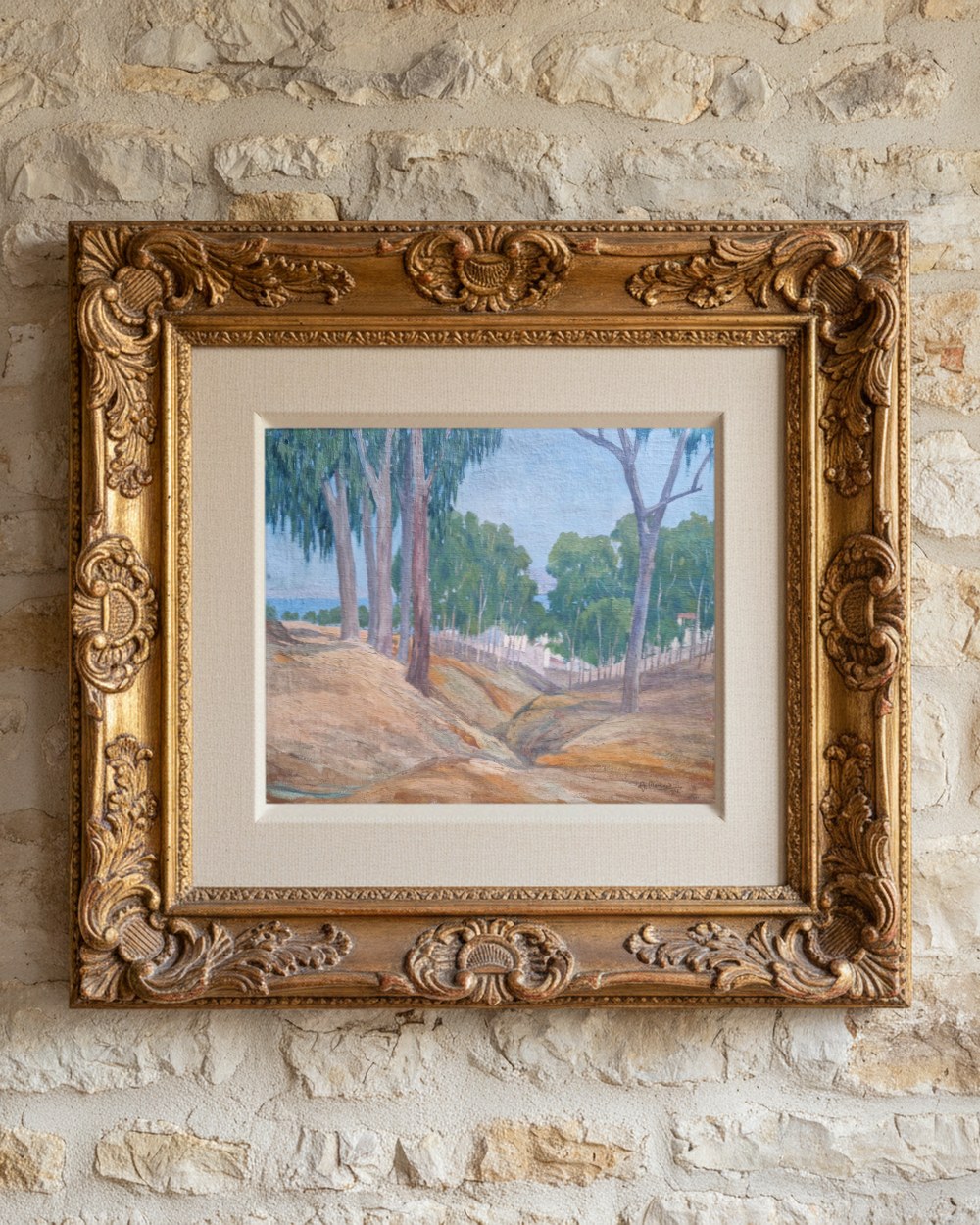
Our Paysage d'Alger (Landscape of Algiers), from 1928, is catalogued « Signé b.d. » (Signed lower right): a signature is visible in the lower right corner, but we have not identified its author, and the label therefore names no one. We describe what we see, without attributing the painting to an artist.
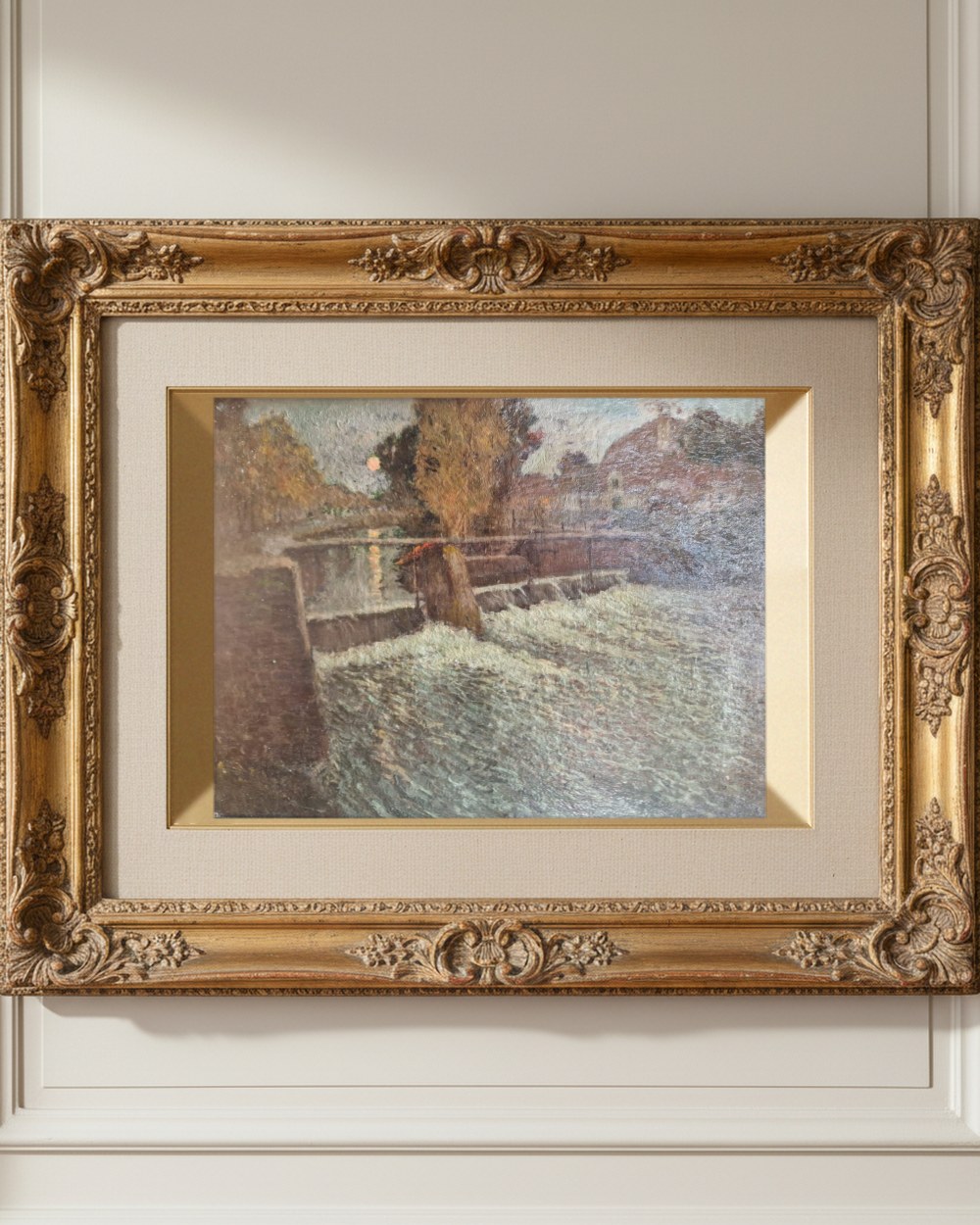
Our Paysage nocturne de rivière (Nocturnal River Landscape) is catalogued « École française, XXe » (French school, 20th century). This is not a "school of" followed by an artist's name in the sense of article 6: it is a broad indication of origin and century. If a label leaves you in doubt, ask the question, and remember that the decree entitles you to obtain these particulars in writing.