Pierre Prins, the Missing Guest of 1874
A friend of Manet, a neighbor of Sisley on the banks of the Seine, he was due to exhibit at Nadar's in 1874. His twelve canvases never arrived.
6 October 2026
On December 27, 1873, in Paris, a group of painters founded a society with an unpoetic name: the Société anonyme des artistes peintres, sculpteurs et graveurs. Among its subscribers were names everyone knows today — Claude Monet, Auguste Renoir, Alfred Sisley, Camille Pissarro, Edgar Degas, Paul Cézanne. Some sources add a name almost no one cites anymore: Pierre Prins. The list of the charter's 22 subscribers, however, does not mention him.
A few months later, from April 15 to May 15, 1874, this society organized, in the former studio of the photographer Nadar, an exhibition that history would remember as the first Impressionist exhibition. Prins was supposed to be there. He is not in it.
Twelve Canvases That Never Arrived
The story comes down to one oversight. Before leaving for Namur with his wife, who was ill, Prins entrusted twelve of his paintings to a childhood friend, the sculptor Émile Philippe Scailliet. Scailliet was to hand them to Sisley, who was to deliver them to Nadar's. The canvases were never delivered. Prins would never exhibit with the group.
A painter's fate sometimes turns on an errand a friend forgot to run.
In Manet's Intimate Circle
Born in Paris in 1838, Pierre Prins was a painter, pastellist, and sculptor. He entered Édouard Manet's circle through his sister Pauline, who was very close to Suzanne Leenhoff, the painter's wife. In 1869, he married Fanny Claus — Manet was their witness. If her face looks familiar, it's because she poses in Manet's “Le Balcon”: the young woman standing, parasol in hand, beside Berthe Morisot.
Prins spent time with Manet and Sisley on the banks of the Seine, at Chatou. But the Musée Fournaise, which devoted an exhibition to him, sums him up in an apt phrase: he was "too steeped in the art of Corot and Daubigny to be marked by his friend's painting." A plein-air landscape painter, more than a disciple.
A Career in Plain View
Prins was nothing like a cursed, forgotten painter. He exhibited at the Salon in 1868 and 1878; in 1890, the Galerie Georges Petit presented 43 of his pastels. The Musée d'Orsay today holds several of his works, including the pastels “Brume et soleil sur la Manche” and “Ciel breton au Pouldu.” He died in Paris in 1913.
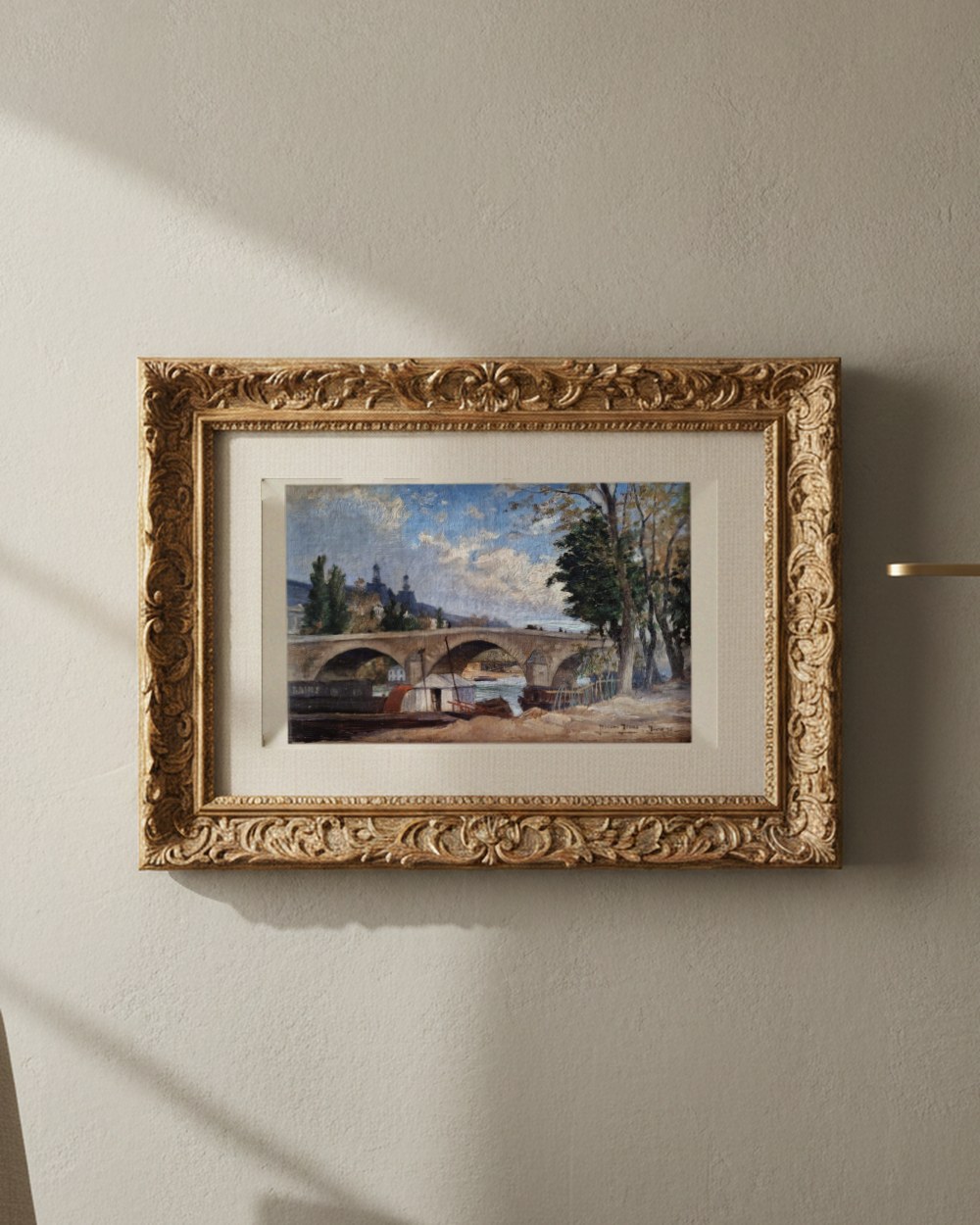
His “Berge du quai d'Orsay,” painted in 1876, two years after the missed appointment, shows what he could do: a stone bridge, moored boats, light playing on the Seine — a working Paris, painted without emphasis.