Oil on Canvas or on Panel: What the Support Tells About a Painting
Before looking at what is painted, one can ask what it is painted on. A wooden board, a stretched canvas, cardboard: a painting's support carries the trace of an era, a way of working, sometimes a journey.
21 October 2026
Wood, the Painting's First Support
In Italy, painters most often used a local wood, chiefly poplar, but also chestnut, walnut or oak. Leonardo da Vinci's La Joconde (the Mona Lisa) is the most famous example: an oil on poplar panel measuring 77 × 53 cm.
Further north, the Flemish primitives painted on oak. As local wood ran short from the early fifteenth century, most of the major works of the old Low Countries are painted on Baltic oak, often Polish, felled north of Warsaw and shipped down the Vistula. Jan van Eyck's Portrait des époux Arnolfini (Portrait of the Arnolfini Couple), dated 1434 and held at the National Gallery in London, is thus painted on an oak panel made of three vertical planks.
Before painting, the wood was covered with successive layers of gesso, each one sanded before the next — sometimes as many as fifteen — to achieve a smooth, hard surface often compared to ivory.
Venice and the Arrival of Canvas
In Italy, canvas overtook panel in the first half of the sixteenth century. The shift was led by Mantegna and by the painters of Venice, a city that at the time produced the best canvas — the kind used for ships' sails. The earliest canvases were made of linen, a sturdy fabric particularly well suited to oil paint.
In the Low Countries, the shift took about a century longer, and panel remained common in northern Europe even after canvas, cheaper and easier to transport, had become the main support. The young Rubens still preferred wood for the precision a perfectly rigid support offers, and many Dutch Golden Age painters — Rembrandt on occasion — chose panel for their smaller formats.
In the Nineteenth Century, Painting Leaves the Studio
In 1841, John Goffe Rand, an American portraitist settled in England, patented a flexible metal paint tube: American patent number 2,252, dated 11 September 1841. It was the English firm Winsor & Newton that brought the invention to market. Color could now be kept without drying out. According to his son Jean, Renoir believed that without paint in tubes, there would have been no Cézanne, no Monet, no Sisley, no Pissarro, nor anything of what journalists would come to call impressionism.
Painting outdoors means carrying everything with you, often on long walks. Pochade boxes, which hold colors and palette and whose lid doubles as a support, still today accommodate surfaces rarely larger than 50 cm. The studies painted en plein air between 1780 and 1870 by Corot, Constable, Turner or Rosa Bonheur are often oil on paper, on cardboard or on panel, in formats of some twenty centimeters. In Melbourne, in 1889, an entire exhibition even gathered 183 "impressions" painted outdoors on cigar-box lids, many of them measuring 9 × 5 inches.
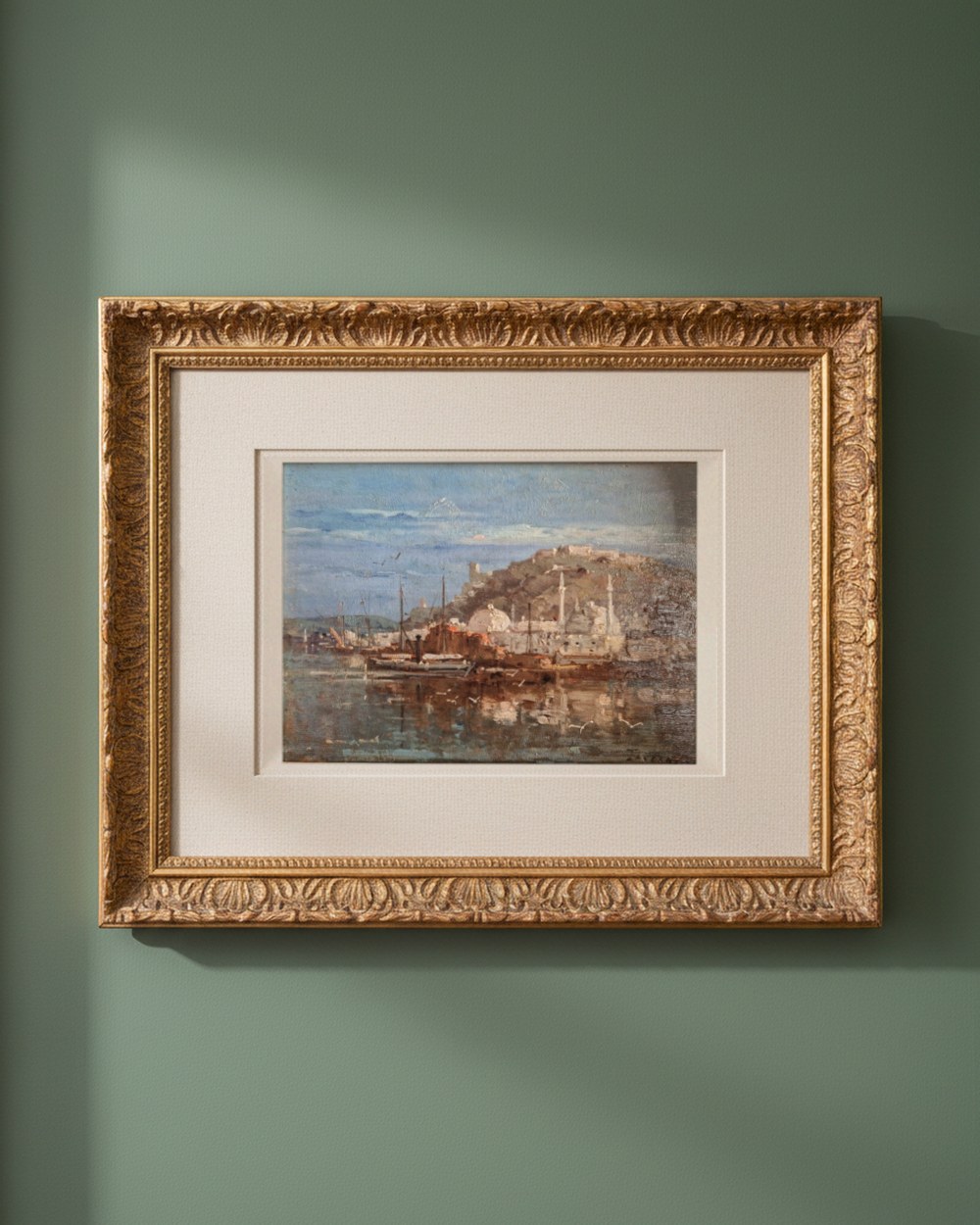
Louis Taverne's small Vue du port d'Alger, oil on panel measuring 15.5 × 22 cm, belongs to this family of formats that fit inside a box. We do not know where or how it was painted; its support and dimensions simply remind us that wood never left the studios.
What the Support Changes
Over time, a panel can warp and crack; since the nineteenth century, once reliable techniques were developed, many have been transferred onto canvas or onto modern supports.
Craquelure, that network of fine cracks in the paint layer, can arise from drying, from an impact, from aging. The pattern it forms differs depending on the support: on Flemish panels of the fifteenth and sixteenth centuries, it tends to follow the grain of the wood, in straight segments; on Italian panels from 1300 to 1500, it cuts across it, in jagged lines. Genuine craquelure is irregular, while that produced artificially generally looks uniform.
Oak is also useful to historians: its growth rings allow it to be dated. Of 250 paintings from the fourteenth to seventeenth centuries analyzed between 1971 and 1982, dendrochronology made it possible to date 85 to 90% of them. It works poorly, however, on Italian poplar, whose rings are too irregular.
How to Recognize It
The simplest way is to turn the painting over. A canvas is stretched over a stretcher, a wooden frame that holds it taut: on the back, you see the fabric. A panel is a rigid board: on the back, you see wood or cardboard, with no stretched fabric.
The back often holds other clues: manufacturers' marks, stamps, labels from color merchants. One finds there, for instance, the names Binant, Bourgeois Aîné, Lefranc & Cie or Gustave Sennelier, on examples dated from 1862 to 1904.
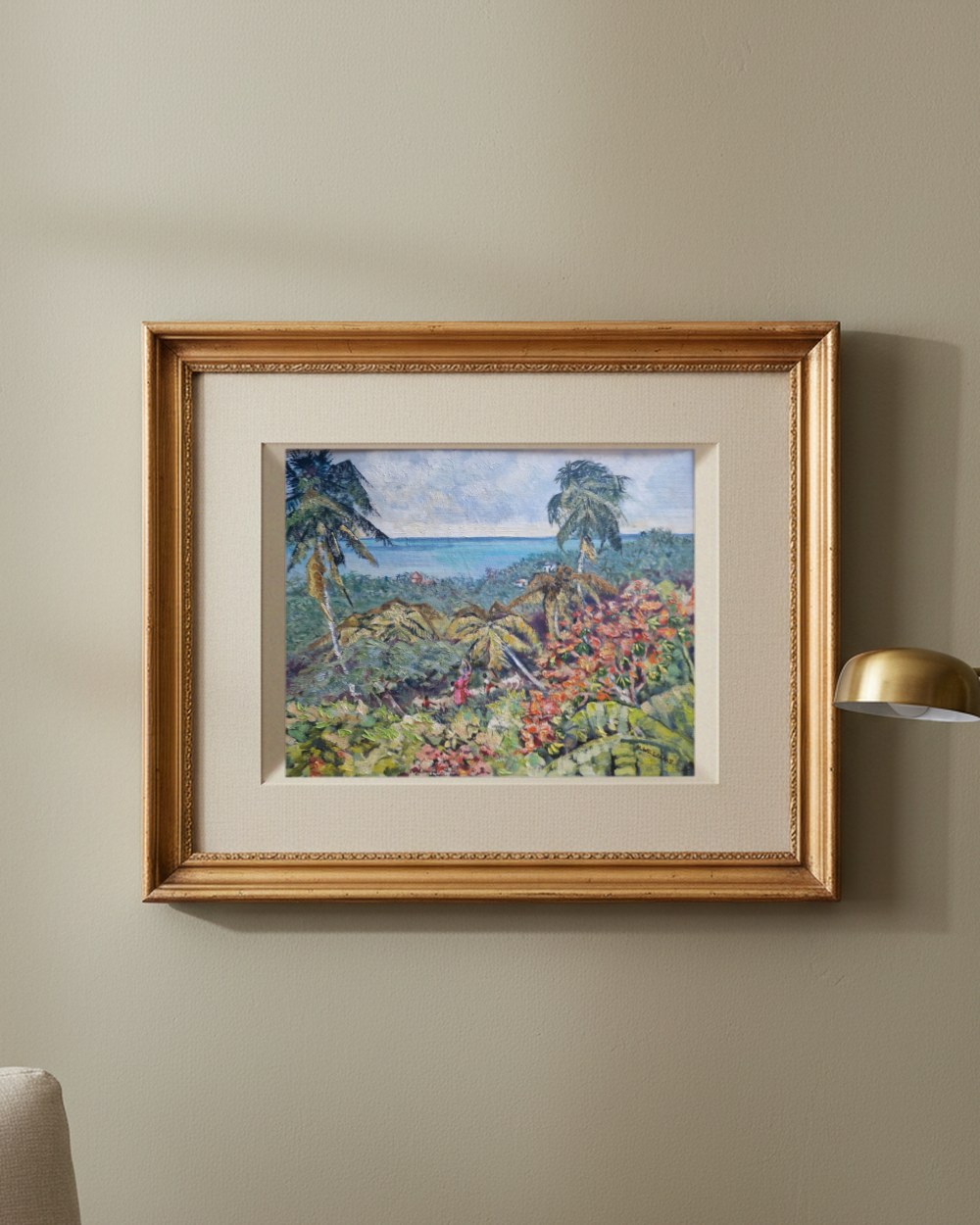
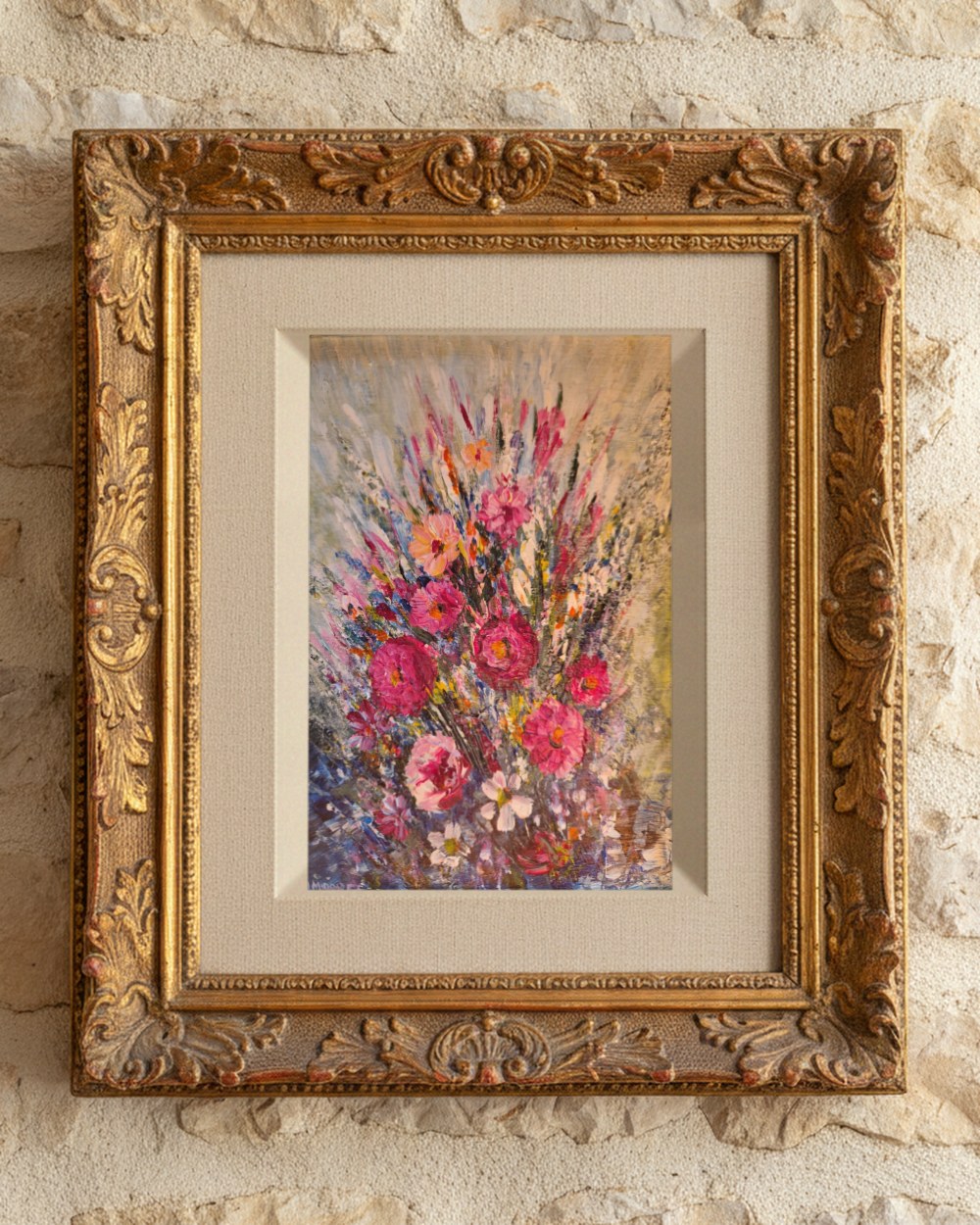
In our catalogue, Mont Irvine, Tobago by Margaret Williams, painted in 1983 in oil on panel (41 × 51 cm), is a reminder that wood carried through the twentieth century, as does the small Nature morte florale (Floral Still Life) by Odette Midorge, oil on wood measuring 23.3 × 16 cm. Turn a painting over: its back often tells as much as its front.