At Nadar's, 1874: What Really Happened at the First Impressionist Exhibition
On 15 April 1874, thirty artists hung their own canvases in a studio on the boulevard des Capucines, outside the official Salon. A month later, they had gained a name, and lost money.
7 October 2026
A Cooperative Rather Than a Jury
It all begins with a disappointment. At the 1873 Salon, artists whose work had been rejected complained about the jury's conservative choices. Rather than wait for another selection, a few of them decided to organize themselves.
On 27 December 1873, they signed the charter of a « Société anonyme des artistes peintres, sculpteurs et graveurs » (Limited company of painters, sculptors and engravers). The tool was modest and practical: a cooperative. Camille Pissarro helped draft its bylaws, drawing inspiration, in a delicious detail, from the bakers' union of Pontoise. The company took 10% of every sale made by its members.
35, Boulevard des Capucines
A venue was needed. It would be 35 boulevard des Capucines, in Paris, in the studios of the photographer Nadar. He had just left them for larger premises on the rue d'Anjou: the rooms were free.
The exhibition opened on 15 April 1874 and closed on 15 May. Thirty artists took part, and the catalogue numbered 165 works. Among them were names history would remember — Monet, Renoir, Degas, Pissarro, Sisley, Cézanne, Berthe Morisot — alongside painters now almost forgotten. Admission cost one franc, the catalogue fifty centimes. The event did not even have an official title: it was the press, after the fact, that would name it.
Le Charivari and a Word Coined to Mock
On 25 April 1874, the satirical newspaper Le Charivari published a review signed Louis Leroy, titled « L'Exposition des impressionnistes » (The Exhibition of the Impressionists). Leroy recounted his visit in the form of a dialogue, in the tone of farce. His favorite target was a painting by Claude Monet, number 98 in the catalogue: « Impression, soleil levant » (Impression, Sunrise).
Under his pen, the word « impression » became a label. It is the first known use of the term « impressionists » to describe these painters. The name was derogatory, popularized by a journalist poking fun, and yet it stuck, often against the wishes of the artists themselves. Sometimes a mockery outlives its author.
The Reckoning: 3,500 Visitors and a Debt
In terms of attendance, the venture was modest. The exhibition received about 3,500 visitors in a month. By comparison, the official Salon attracted around 400,000 at the time. Only about a dozen canvases found buyers.
The finances did not hold up. On 17 December 1874, the company held a liquidation meeting: fourteen members were present, two sent their apologies. To pay off the debts and replenish the fund, each member had to pay 184.50 francs. The cooperative born a year earlier was liquidated in December 1874. The name, though, stayed.
The Signatory Who Did Not Exhibit
Among the founders of the company, several sources name a Paris painter, Pierre Prins (1838-1913). His name, however, does not appear among the thirty exhibitors. The reason lies in a forgotten errand: with his wife ill, Prins left for Namur and entrusted twelve canvases to a childhood friend, the sculptor Émile Philippe Scailliet, who was to hand them to Alfred Sisley so he could drop them off at Nadar's. Scailliet forgot. Prins would never exhibit with the impressionists. The couple returned to Paris as early as 1875, and the painter went his own way, apart from the group.
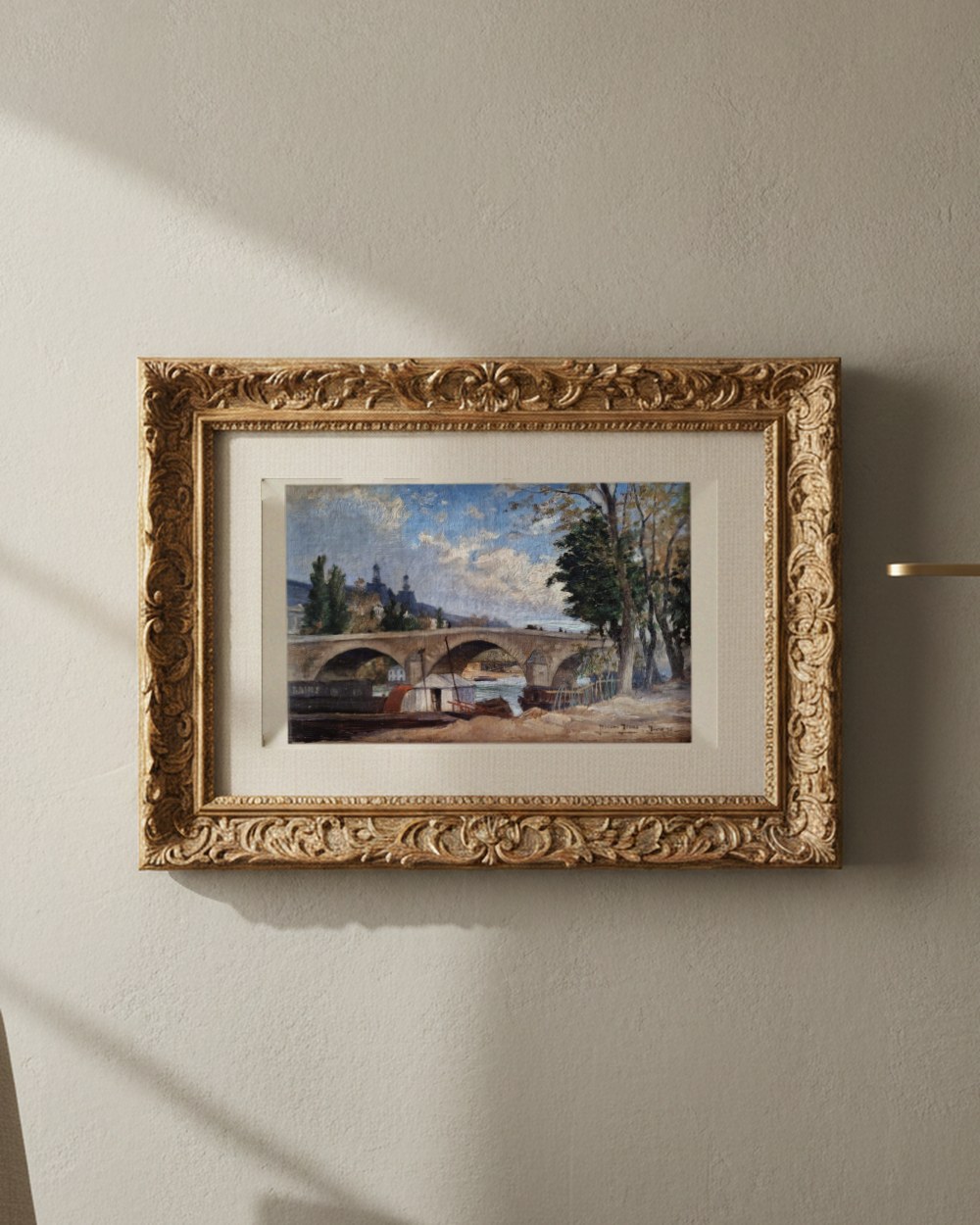
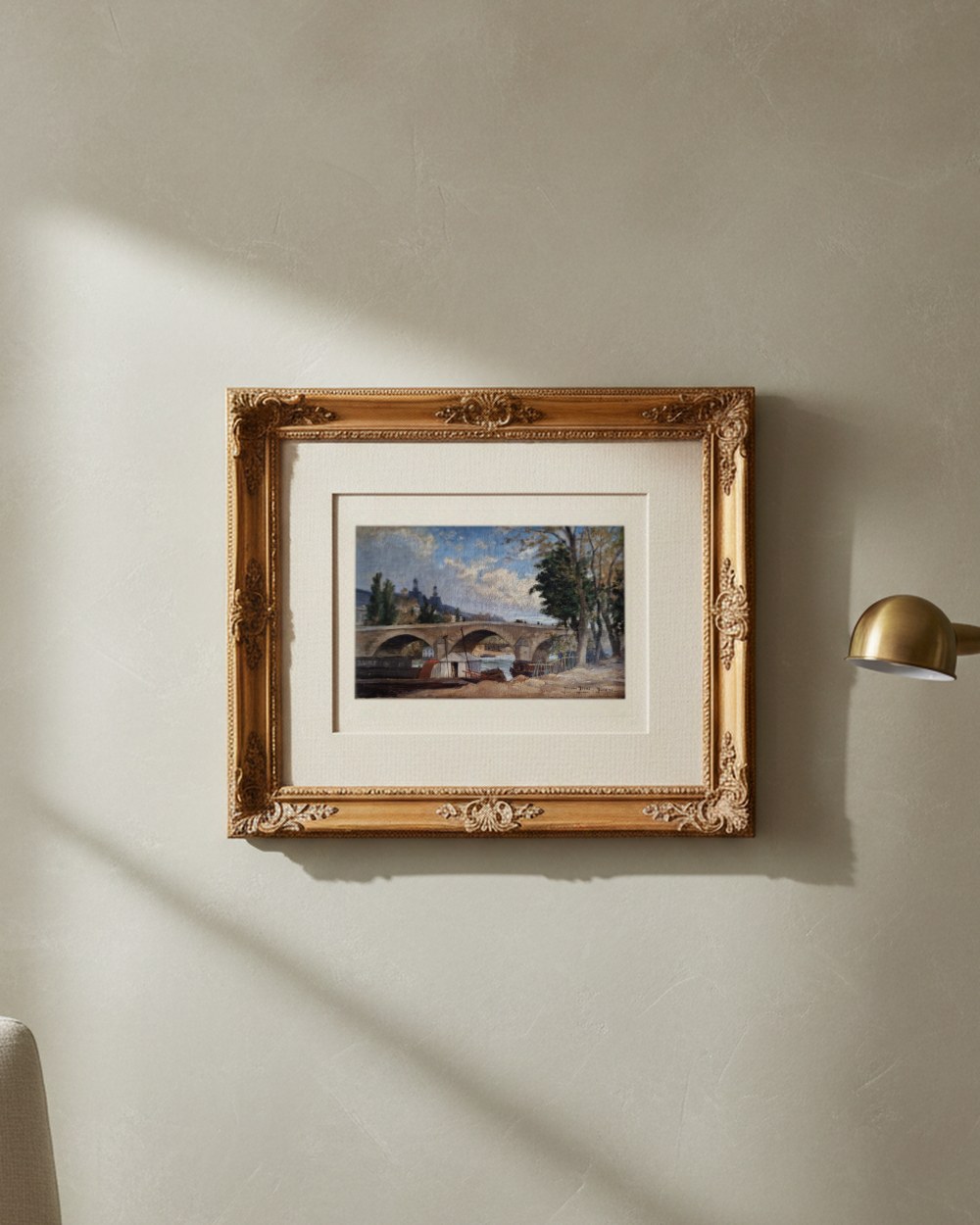
We tell his story in detail in a dedicated article, « Pierre Prins, l'invité manquant de 1874 » (Pierre Prins, the missing guest of 1874). And our catalogue presents one of his canvases, « Berge du quai d'Orsay », painted in 1876, two years after the missed appointment on the boulevard des Capucines.